About
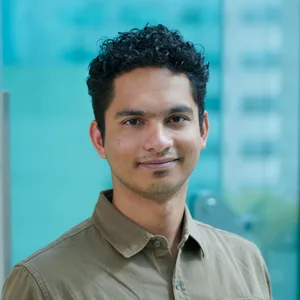
I am a Postdoctoral Associate at the McGovern Institute for Brain Research at MIT, working with Prof. Evelina Fedorenko and Prof. Mark Richardson. My research investigates the neural mechanisms underlying language processing using intracranial recordings and computational modeling techniques.
I completed my Ph.D. in Biomedical Engineering at Duke University, where I conducted research with Prof. Gregory B. Cogan and Prof. Jonathan Viventi. My dissertation focused on uncovering the cortical mechanisms of human speech for both brain-computer interface (BCI) applications and speech neuroscience. Before that, I completed my masters in Biomedical Engineering at University of Michigan, Ann Arbor.
I am passionate about bridging the gap between basic neuroscience and clinical applications using engineering techniques, with the ultimate goal of advancing our understanding of human cognition.Throughout this journey, I’ve collaborated closely with neuroscientists, clinicians, and neural engineers—and am deeply grateful to the patient participants whose altruism advances science
News & Talks
Research Updates
Distinct neural processes link speech planning and execution
Although speaking recruits a distributed network of brain regions, it has been unclear how the brain coordinates planning a sentence with actually executing the movements to speak it. Using the high spatial and temporal resolution of intracranial recordings, this dissertation-based project identifies distinct neural mechanisms for speech planning versus speech execution.
Read more
During planning, different levels of speech units (e.g., phonemes, syllables) are represented discretely across distinct prefrontal sites. These planned units are then dynamically integrated across cortex to guide execution. During execution itself, speech motor regions generate continuous activity that reflects both the discrete planned units and the transitions between them — a rapid shift from discrete planning representations to continuous motor sequences that may help explain how speaking feels effortless.
Duraivel, S., Rahimpour, S., Barth, K., Chiang, C.H., Wang, C., Harward, S., Lad, N., Sexton, D., Friedman, A., Southwell, D., Sinha, S., Viventi, J., Cogan, G.B. (2026): Distinct neural processes link speech planning and execution, Nature Human Behaviour. Paper
Shared latent representations of speech production for cross-patient speech decoding
Speech brain-computer interfaces (BCIs) could restore communication for people with neuromotor disorders, but current approaches require large amounts of patient-specific training data collected over long periods. This project asks whether aligning neural data from different patients into a shared latent space can allow a speech BCI to be trained across patients rather than starting from scratch for each one.
Read more
Combining data across patients is difficult because of differences in neuroanatomy, electrode placement, and sparse sampling of the targeted cortex. Using canonical correlation analysis with high-density micro-ECoG, we found shared latent neural dynamics across patients that preserved fine-grained, micro-scale speech information. Decoding models trained on this shared latent space outperformed patient-specific models, suggesting a path toward speech neuroprostheses that need less patient-specific training data.
Spalding, Z., Duraivel, S., Rahimpour, S., Wang, C., Barth, K., Schmitz, C., Lad, S.P., Friedman, A.H., Southwell, D.G., Viventi, J., Cogan, G.B. (2026): Shared latent representations of speech production for cross-patient speech decoding, Nature Communications. PaperCode
Monosynaptic connections link functionally similar regions in human cortex
The functional organization of the human cortex has been mapped in detail, but the anatomical wiring linking these areas is much less understood. In this project, we used simultaneous electrical stimulation and fMRI (es-fMRI) in patients undergoing intracranial monitoring to trace direct, monosynaptic anatomical connections between cortical sites across the whole brain — including a link between the fusiform face area and the temporoparietal junction, two regions both implicated in social cognition.
Read more
Connectivity followed an asymmetric functional-similarity principle: sites that were directly connected tended to share similar functional profiles, but because anatomical connectivity is sparse, most pairs of functionally similar sites were not directly connected. Together, these results offer a first principled link between anatomical connectivity and functional organization in human cortex.
Xu, R., Bush, A., Takahashi, A., Sisterson, N., Walton, A., Hutchinson, S., Kammen, A., Neudorfer, C., Kokkinos, V., Nanda, P., Jhingan, N., Marvi, A., Fung, A., Duraivel, S., Richardson, R.M. (2026): Monosynaptic connections link functionally similar regions in human cortex, bioRxiv. Under review at Nature Paper
High-resolution neural recordings improve the accuracy of speech decoding
People who lose the ability to speak due to neurodegenerative disease could regain communication through neural speech prostheses that decode intended speech directly from brain signals. This paper asks how much of that decoding bottleneck comes from the coarseness of standard intracranial recordings, using high-density micro-ECoG recorded during intraoperative speech production.
Read more
We recorded intraoperatively with high-density micro-electrocorticography (μECoG), achieving roughly 57 times higher spatial resolution and ~48% higher signal-to-noise ratio than standard macro-ECoG or SEEG electrodes. This higher-resolution signal improved speech decoding accuracy by about 35% relative to standard intracranial recordings, indicating that decoding performance for speech neuroprostheses is fundamentally limited by the spatial resolution of the recording interface, not just the decoding algorithm.
Duraivel, S., Rahimpour, S., Chiang, C.H., Trumpis, M., Wang, C., Barth, K., et al., Cogan, G.B. (2023): High-resolution neural recordings improve the accuracy of speech decoding, Nature Communications, 14(1), 6938. Paper
Contact
- Email: sdurai30@mit.edu
- LinkedIn: linkedin.com/in/dsuseendar